INTERVIEW: James and the Cold Gun chat about new album, UK rock scene and touring with Guns N’ Roses
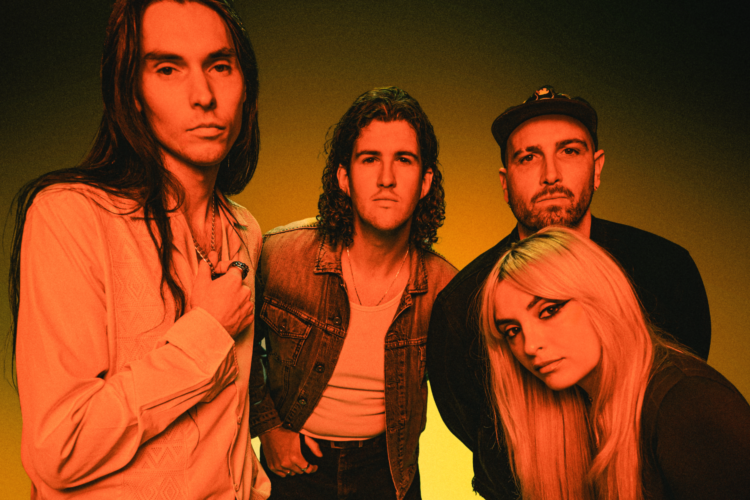
Our writer Cassandra Paiva sat down with James Joseph (Vocals, Guitar), James Biss (Guitar), and Gaby Elise (Bass) of James And The Cold Gun after their set opening for Mammoth at State Theatre in Portland, Maine.
CP: You’ve hopped on some pretty big tours over the years. How do you think the reception has been from tour to tour?
JB: It’s definitely getting better for us. Whether that’s… we’re getting better, we’re dialing in more. I think we’re definitely getting used to this American landscape and the crowds and everything. They seem to like us just going wild and really kind of living the songs on stage. The more that you see, that’s what people actually like about us, well, great, that’s what we love about doing it. It’s definitely gotten better and better. We see more and more James And The Cold Gun t-shirts. And some of these shows already, there’s people singing the lyrics. These first few US tours that we did, no one had any clue who were. So it’s nice to see the reaction.
CP: That was kind of my next question, so in this current landscape, and you even said on stage, it’s harder for international and UK bands to come over to the US, whether it be Visa approval or travel expenses. How do you think that you’ve fared on these last few runs? Do you feel a difference between touring here and touring in Europe?
JJ: There’s definitely still a real appreciation for rock music, especially in the cities or the towns that are, I guess, not the major cities, major markets. I think rock music plays a huge part in people’s lives over here. I don’t know whether that’s because people drive more, and they’re traveling to work, so they’re looking for something to get them through the day. There’s a real appreciation, which feels great. And I think it’s really cool that people appreciate how far we are from home, and we’re away from our loved ones and stuff, because we love this music so much. We feel the love , and we’re giving back every night.
CP: Back to going on tour with some of these bigger, legacy acts like Guns N’ Roses and The Darkness, what’s something that you’ve learned from touring with them? Have they given you any good advice?
JB: One thing that was really surprising is, some people that you meet who are kind of in the middle, they can have egos.
JJ: Oh yeah, we’ve toured with some douchebags.
*laughter*
JB: We did that Guns N’ Roses support, and then we ended up touring with Duff McKagan’s solo project, and if anyone’s going to have an ego, it’s Duff. And he was the nicest guy ever.
GE: Really humble, really down to Earth.
JJ: True punk rocker.
GE: Yeah, true punk rocker. Just again, no backing track, just straight, really great musicianship. I think with his generation of music as well, they’ve lost a lot of people. He’s spoken a little bit about Mark Lanegan and Layne Staley and stuff like that, and it gives you a real appreciation because, I always feel like bands now a days, you kind of don’t really have that risk. We’re all trying really hard. We’re all really glad that we’re on the wagon, very kind of locked in. But it gives you a real appreciation, like, there was a time where they lost a lot of people. And music really was kind of like a saving grace, but also a really big vice for people. I definitely take that into account and try not to take for granted all of the opportunities that we get and really try to make the most of them.
JB: The thing I’ve heard from a lot of people is just, they’re like, just keep going. We’re not necessarily doing something that‘s like a niche genre that has..
JJ: Flavor of the month.
JB: Yeah, we’re not doing a flavor of the month thing. We’re doing something that we love doing, that I think other people appreciate. And especially some of these legacy acts, they see almost like a younger version of what they were doing. And it is a slower build, it is a hard grind doing something like this, because we’ve not really got any crazy kind of, “Ooh look at us, we’re this, we dress like this,” we‘re just a rock band.
JJ: Yeah, no gimmicks.
JB: I think they kind of appreciate that, and they’re like, just keep going with it, and you should really trust it.
CP: I think back then too, not that it was easier, per se, but there were a lot of bands that brought a new sound, a new thing, and now bands, not that everyone’s seen it all, but..
JJ: No, totally. It’s definitely hard to do something new. But I think at the same time, there’s sort of cyclical nature to music. I love it, I really respect it when bands are really open and honest about what they’ve stolen from. There was a quote by a famous musician, I can’t remember, “Being an artist is just stealing, like being a really good thief.” I think it’s really cool if someone’s like, “That’s a great riff,” and you can be like, “Oh, it’s this riff from this song 30 years ago, kind of, with a new spin on it, or it’s this beat.” I really like that; I think it’s a way of paying it forward. It’s cool for fans. Because a lot of my favorite things I‘ve discovered, there are tiers to music. My favorite band, I love their song, but then they say they’re inspired by this older band, so then I check out the older band and go back and back and back. So that’s cool.
GE: I think there’s definitely something about it, so long as you’re consuming music. For me, it was learning songs on guitar and bass; you kind of just absorb stuff in your brain, so that when you write, it just kind of comes out. And I think, so long as you’re being true to your interests and influences, it becomes new or modern just by virtue of how you’re taking those influences and combining them together.
CP: What bands, past or current, have you taken inspiration from?
JJ: I think the big one for all of us is Soundgarden. That’s the most obvious one for us. And Alice in Chains as well. All of the 90s grunge stuff. But also, we’re not just a grunge band either. I think we all have very different [styles]. Grunge is the one thing we can all agree on rocks, but then we all have wildly different tastes outside of that, and we all bring little elements of that. Whether for me, it’s hardcore and punk music, which you hear in songs like “Cut the Brakes.” Biss has some of the alt rock, the more alternative side. Gaby with the vocal harmonies from people like Jeff Buckley.
GE: I love Jeff Buckley, he’s like my favorite. I feel like there was something about the 90s where there were so many music scenes going on. There was the Seattle grunge thing, and there was art rock in New York City, and loads of really creative stuff going on during that time. We listen to modern stuff as well; bands like Fontaines [D.C.], Dive, loads of bands coming out at the moment.
CP: Going back to Seattle, it must be super cool for you guys that Stone Gossard signed you.
JJ: Crazy. Totally crazy.
JB: It’s a fairy tale story.
JJ: Lightning strike.
JB: The funniest thing about it, we’ve had a few moments in the band where, it always seems to be, that saying, “It’s always darkest before the dawn,” but there’s been times, especially pre-Gaby joining the band, where me and him would look at each other in the garage and be like, “Fuck, we’re going to have to knock this on the head soon.” And get a job, because no one gives a shit. And then out of nowhere, a grunge legend or a rock legend gets on the ol‘ Instagram DMs.
JJ + GE: Slides in the DMs.
JB: Kevin Cole played it on KEXP, one of the songs off our EP, and Stone just happened to hear it, because he was listening to it, and he sent us a message because he was looking for more UK bands for his label. It’s also the label that put out the first Queens of the Stone Age record, which I absolutely love. So, yeah, just a wild moment.
CP: You guys released your second album, Face In The Mirror, just about a year ago. How do you feel about it after touring on it for a few months? And are there any songs that have transformed for you live?
JJ: It’s an interesting one, because actually, we’re pushing a song. Well, our label is pushing a song right now called “Guessing Games,” and it’s so funny because we wrote that song in 2023, so it’s even older for us. But I think playing it live, playing these big rooms, and hearing people and watching everyone groove to it, it gives us a newfound kind of love for it. Whereas, pre-touring it, we were kind of sick of it because you’re listening to mix revisions. That period before it comes out, it’s kind of like trying not to burn a meal or over-salt. You’re listening to it and trying to find what’s wrong with it before anyone else gets it. I think now it’s just out there, it’s for the people, it’s not for us. We’re proud of it, we also think we can do better with the next thing.
JB: I think from tour to tour, seeing more people supporting the band. You go to a city that we’ve been to maybe a couple of times now, and you’re like, “Oh, I remember you.” And you see the lyrics sung back. And it kind of reminds you then that you’ve done something good because it’s resonated with someone. Say, for example, in Montreal, there was a guy who came up, a father and son right in front, and they were singing along to most of it. He came up at the end and was like, “I really love ‘Above the Lake.” It got me through some really hard times.” And it got me through some hard times, that’s why I wrote it. Seeing that, it transforms it for you, because before, it was just a song that helps you get through your own stuff. Then the more you tour it, you actually see that it can reach people and become something bigger than what you intended it to be.
GE: I think there’s really something in what James just said that once you put the song out there, it’s no longer yours. You might write a song with a feeling of, you need to get through something, or to express something you’re going through, but once it’s being picked up by other people, it’s no longer about what you did; it’s also about how everyone else experiences the song. Which is so fucking awesome, it’s why music is so important.
JJ: A really funny one, you know, “Every Breath You Take?” It’s about a stalker, and loads of people walk down the aisle to it.
GE: I mean, whatever you take from stuff, you know. We all take meaning from different things.
JJ: One thing that’s also cool, you know, when you’re in school, and you have to analyze a poem or whatever? It’s cool when fans do that and they actually pick out something that, whoever did the lyrics, I’ll say me for this take, they’re like, “Oh wow, I love what you did what that” and I’m like, “Did I?”
GE: It might’ve been subconscious, though, you’re still creating, and that’s coming from you. And even if you don’t know consciously, it might be coming from somewhere else.
CP: How do you think your writing process has developed from the early days of playing in your garage to now?
JB: Well, there’s more cooks.
JJ: In a good way.
JB: Going into it from the start, it was just me and James, so we had two voices available. We both have our strengths and weaknesses as songwriters and came together really well. And now we’ve kind of gotten to the point.. We’ve spent many, many a day in the garage just sat there like, we can’t come up with anything, we’re stuck on this spot. I feel like we’ve learned a lot from that. So, now for this next record, everyone gets a bit of time apart, gets some ideas together, get something you really like, then we hit a room together when everyone’s got some things, and we can really kind of flesh it out together, build some things, make some really good demos. It’s probably a lot healthier way. Some ones you just get in a room and the pressure of having to create something on the spot, I know that doesn’t work very well for me.
GE: It is hard coming up with stuff on the spot. From my background as well, I never have been good at the technological side and putting stuff in on DAWs and stuff. I was always kind of like, got some ideas, come up with some guitar sounds, chords, lyrics, and take it into a room and build on it in the moment. Whereas, Biss and James are really good at putting it together, especially Biss, building it on the computer, fleshing out an idea. So I think a combination of those things is really healthy. Because you can be so creative on the computer, and then once you have everyone in a room, also jamming out with Benny as well, the song can kind of take its own. That’s where it becomes really collaborative.
JJ: We’re excited after this tour especially. We’ve had a bunch of drummers come and go. Well, we had session musicians for a long time. Whereas Benny feels like he’s in the room, but he feels like the one. (Biss had no idea Benny was there) The three guys live quite close to each other, and then Gaby takes the train down, so the band are quite close together and we can actually get in a room and jam for the first time. After this tour, we can really spend some time together, just enjoying hanging out and playing through stuff. Biss’s dad gave us some really good advice one day when we were struggling. It stuck with me. There would be times when we wouldn’t know if something was good or not. And he was like, “Come on guys, if you two like it,” because we’re haters, we hate everything, “if you two like it, it’s obviously pretty good.” And now we’ve got four people, so if we’re all vibing on something in a room, there’s got to be something in that. We’re all massive music fans.
CP: Do you write on tour, or is it just strictly focused on the live aspect?
JB: We’ve all got set-ups at home, and we’ve got a setup now to write on tour. It’s something that we’ve not really. We’ve been on tour for lengthy times, but we’ve always kind of written when we’re back. But now going back-to-back, tour to tour, we actually kind of need to take this process on the road. We’ve not done much; we’re only a week in.
JJ: We’re still such a DIY band, so like most bands at this level have crews to help do the load in, restring guitars, do the soundboard, but it’s basically just us and Beaux, who you met. So it is hard to find the time. But we have some days off on this tour, so we might try, a couple of weeks in, once we’re in a rhythm, to grab a hotel room somewhere and set up a makeshift studio for the day.
JB: This is probably the third big tour we’ve done of America now, and the first few times, you’re like, oh my god, this new place, there’s this, we can do this. And we want to be crazy tourists seeing everything in one day, and we get absolutely knackered. You burn out then. But going to the same places again, hopefully, well, not hopefully, but for the writing’s sake, we’ll get a bit bored after two weeks and want to be creative and hopefully do something. We’ve got a couple of new things already on the go. We’ve been demoing back in the garage a lot, and all the projects are here with us, so when one of us gets bored. It’s a new thing for us, writing on the road.
JJ: We’re really lucky as well, our label is quite old-fashioned in the sense that they still believe in the power of songs. They took us on after we’d already released the record, so like I said earlier, they’re pushing “Guessing Games.” They still think it’s got something. Which is really cool, because a lot of labels, sometimes music is dead on arrival if it doesn’t pop on TikTok or if kids aren’t dancing to it everywhere, the band gets taken out the back and shot. It’s such a travesty, it really makes my blood boil.
GE: I also think that with writing, there’s such a pressure of this idea of sitting down in a studio, writing to record the music. Whereas writing can be just writing down some things you feel. I was saying this to the guys, I love making playlists of songs that I would like to make a song that sounds like that. Whether it be the bass line or the soundscape, or I really like the lyrics of a song, I like the way it’s articulated through the voice. That’s still being creative in creating a song. You can do those things on tour.
JB: What helps as well is, playing this album to, I say 90%, still new people every night, you see what people really vibe to. We’ve done this song before, I’d love to do a better version of this, but we can do this instead now because people really, really got into that. Obviously we love all the songs anyway, but seeing artist to audience what goes down really well and make you want to ramp that up. We can do that better, we’ll make them jump even higher next time.
CP: The UK is so rich with rock bands, how do you think growing up in Wales helped your decision to get into music?
JJ: We were really lucky because we grew up in a time that was called Cool Cymru, Cymru is Welsh for Wales. It was a time where there were lots of successful bands, and actors, and artists from Wales. And Wales has always been seen as a bit of an underdog compared to England. It’s the weird country that a lot of people don’t even know is a separate country. And you had bands like Manic Street Preachers, Stereophonics, and then in heavier music, Bullet for My Valentine and Funeral for A Friend. These are all bands that live a stone’s throw from where we’re from in the valleys. Firstly, even knowing that people from where we’re from can do it.. When you first discover music, 9 times out of 10, especially at our age, it was watching Nirvana or Green Day on MTV. So it initially sort of felt like rock was an American thing that American people do. Or just really lucky people from London or Manchester. To then see Welsh people. One of the guys from one of these bands lives by my nan’s house. It was super inspiring, wasn’t it?
JB: Oh totally. There’s a band called Feeder. Feeder for me was like the Welsh Foo Fighters. Being able to see that, knowing he lives in Newport. Even bands like The Blackout from Wales, seeing them. You see all the shows in Cardiff or in the Ponte Leisure Centre or Newport, you see these bands all the time, you hear the Welsh accent, and it’s like, it’s something that I can do as well. That’s really inspiring, as much as seeing big bands is, seeing little bands actually do it you’re like, it is actually possible.
JJ: And we love to try and pay that forward. Whenever someone comes to the merch table after the show and says we’re in a band, we’re always like, “Stick with it. If you need any advice, ask us,“ because we want people to live this life if they can, or at least get a taste of it. Everyone should get a chance to support their favorite bands, it’s such a cool feeling.
JB: We’ve had so many kids up on stage as well. There are so many cool parents out there who bring little kids to shows. Someone might hit us up, and for them it might be a longshot, but they’ll be like, “My son or my daughter plays drums, can they come to soundcheck?” and we’re like, hell yeah, and Benny will be like, “Get behind the kit.” They’re a bit shellshocked, like what do I do? And he’s like, “Snare, high hat..” They’ve then got a moment where they played on stage during a soundcheck. Something like that for us when we were growing up would’ve been a core memory of how you got to do that, it would be so inspiring. So the fact that we get to be able to do that for other kids is really blessed.
GE: I think if I was a kid and someone in one of my favorite bands told me, you can do this, just keep going. That really would’ve changed things for me. Obviously I’m glad that we all kept going, but it’s important to say to people, this isn’t some distant life that’s for rich people or people that live in main cities. You can do this if you care about it and don’t stop. The majority of people we know in bands that are touring are just people who really haven’t stopped, and they’ve made it work. Obviously everyone’s got their own privilege, but it’s important to say, if you love it and it’s your lifeline, just do it. There’s always time to get a 9 to 5. If you want to take the risk, and this is the life you want, it is possible, just give it a go. So much of it is about the hustle and the grind, and you figure out how to make money doing side jobs and make it work.
JJ: You learn so many life skills as well. My mom was always hard on me, she was never quite sure about me doing bands, she wanted me to do something more traditional. Then years later, I know a lot about finance, about business, and I‘m really good at IT, I feel like I can do a lot of things, and I’ll do something and she’ll be like, “How do you know how to do that?” and I’m like, “You have to do it with the band” or there’s a logistical thing. So I think, parents should encourage their kids to do it because it is like running a little business at the end of the day. And it’s creative.
JB: It takes a lot of sacrifice. Genuinely, I’ve seen my friends once this year. And that was at New Year’s. Everything else being at home was rehearsing, being in the studio. I’ve got more than friends, I’ve got family doing this. And this is what I really want to do. It’s something you can come back to later, you can see your friends all the time kind of thing. It’s something you have to stick to and make 100% your thing. We’ve even seen friends who are doing bands, and they’re like, “These people can’t rehearse this week” or “We’ll only play this occasional show.” You have to put your whole life into it.
GE: As a kid I always thought, because I grew up in London, I didn’t grow up in Wales, that by virtue of being in London, someone‘s just going to show up and make you famous and successful, and then you realize, that person is never going to be coming. You need to put in the work yourself and you have to make the sacrifices. With any kind of career you want to do that’s creative, you’ve got to be your biggest supporter.
CP: What bands are you currently listening to?
JB: I’ve got a bit of a mix. I love stuff like Dive. There’s a solo artist from a band called From Indian Lakes, they’re quite like Bombay Bicycle Club, his solo stuff I love, it’s really interesting. Bands like The Dirty Nil, if we’re talking rock. I love that whole band, the rawness of it. I also, like Geese. I heard about them many years ago, it wasn’t just this album, that’s on record.
JJ: I really like this woman called Julianna Riolino, she’s from Canada. She’s like a punk rocker, but she’s doing a folky Fleetwood Mac kind of thing. She’s like the most powerful vocalist ever in the way her face scrunches up and the angry lines are the most full of vitriol and then the sweet stuff is super sweet. She’s probably my most listened to artist of the past year or two. I also love a Scandinavian band called Slomosa. Best riffs in music right now. They’re kind of like early Queens of the Stone Age, more interesting. Wicked.
GE: I am really bad at listening to new music. I think probably of newer bands, I love Bad Nerves, I think they’re fucking awesome. In terms of stuff I‘m listening to a lot, Tori Amos. Never really had a Tori Amos phase, and then listened to Cornflake Girl and I was like, “Oh my god, she’s just amazing.“ I think a lot of music I consume is very male heavy, so I’m trying to be more conscious about where are all of the women in all of the eras of music that I love? So Tori Amos, PJ Harvey. I listen to a lot of Jeff Buckley. There’s a guitarist/singer songwriter who I absolutely love called Emma Ruth Rundle. She is one of my favorite artists. She released a record a couple of years ago called Engine of Hell, and that is just very haunting, she’s got a very ethereal voice. She’s one of my biggest modern songwriter influences.
JB: On that note as well, shout out to Panic Shack. Welsh band, all girl band. They’re nuts. And they’re starting to do bits in the US as well, so if you get a chance to see them. They’re very punky, garage rock, they’re just super cool.
CP: What does the future hold?
JJ: Money, hopefully. *laughter* This is getting stressful.
GE: It would be so nice to get to do this all the time and not worry, but it’ll be ok, right? And make music that we really feel is just fucking awesome.
JB: Yeah.
JJ: I think our dream is to make that record that we can all fully stand behind. Because don’t get me wrong, I like our two records already, but if someone had a gun to my head and said, “Is this the best you can do?” I‘d be like, “No.” It’d be amazing to have a record that everyone in the band is like, we crushed with that. And I think it doesn’t happen until band’s third or fourth, sometimes even fifth. I think Soundgarden is really inspiring in that sense, because Superunknown is their fourth or fifth album, it was really late. And if you compare Louder Than Love, it’s almost like a different band.
JB: What’s cool as well is, we’re already at that point in our career where Stone Gossard is like an uncle to us. We met Jerry Cantrell at our first LA show, we’ve supported Guns & Roses, we’ve just announced some supports for Tom Morello. We’re getting to meet all these musical heroes and play bigger shows.
JJ: Duff McKagan sends me dad jokes every now and again, so I’m able to say that.
JB: Like even this tour, these are way bigger rooms than we play at home. This is Mammoth’s tour, and we do a month of this, then we’re on tour with Bush and Mammoth as well. Even getting to meet these people. Some of our first tours, we toured with a band called Therapy, and they’re from Northern Ireland, huge in the UK in the 90s. Just meeting these people is so inspiring, I want more of that as well. It’s cool that it’s happening at the moment. And also, we need to go to Japan.
JJ: We’d all love to go to Japan.
GE: There’s been a lot of full circle moments, and that kind of makes you feel like you’re on the right path. A life you kind of dreamed of as a kid that you thought was unattainable, and now we’re doing it. We might not be where we want to be yet, but it feels like we’re on the right path to getting there.
JJ: We’re trying to smell the roses a little bit more. I think the first few years of the band, we were so, almost a bit too desperate, to get to the full time touring, that it felt very stressful and we have to do this, we need to do this. Now it’s a bit like, this is awesome, let’s live in it.
Featured image by: Esme Bones (@esmevision)
